
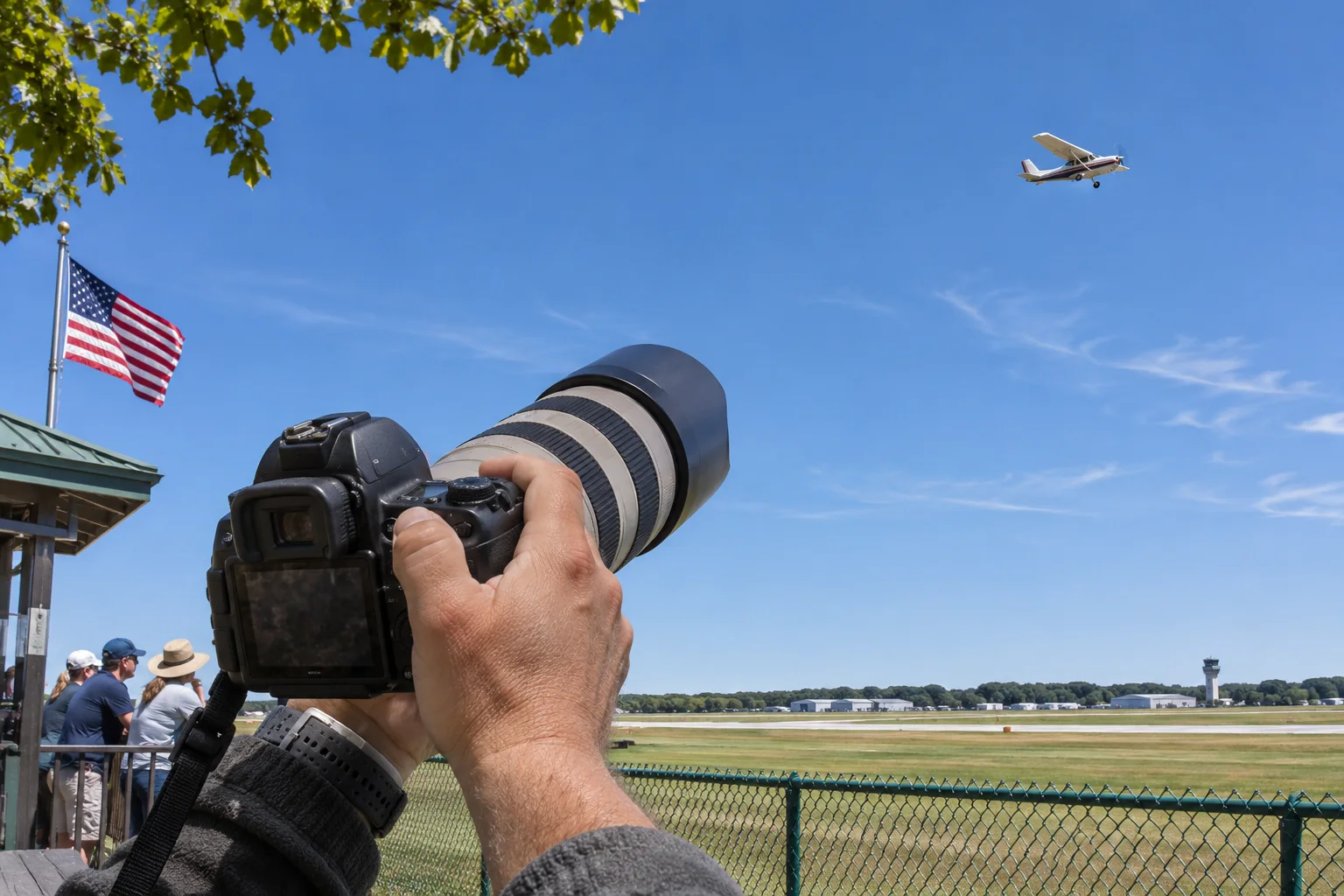
Aviation photography asks you to work with distance, changing light, motion, and access. You do not need a large kit to begin; a clear plan and careful observation matter more than chasing every frame.
Watch the light and background
Early or late light can add shape to an aircraft, while bright midday sun may create hard shadows. Look behind the subject before pressing the shutter. A clean background helps a small aircraft stand out and keeps distracting objects from crossing the frame.
Choose a motion approach
A faster shutter can freeze detail; a slower shutter can suggest movement when you track a subject smoothly. Practice on ordinary moving subjects before an event. There is no single setting for every aircraft, distance, lens, or lighting condition.
Work within the location
Use only public viewing points or spaces where photography is permitted. Respect event instructions, airport boundaries, and other visitors. A long lens does not grant permission to photograph private areas or restricted operations.
Keep files and captions organized
Back up originals, preserve image metadata, and write down the date and location while they are fresh. Separate confirmed facts from estimates. Before publication, review the crop, caption, permissions, and whether the image could mislead readers about what happened.
Keep exploring
Browse another Femoaz guide for more aviation context, practical visit ideas, and photography field notes.
Go to the photo archive